
What is an Orofacial Myofunctional Disorder (OMD)?
Introduction to Orofacial Myofunctional Disorders (OMD)
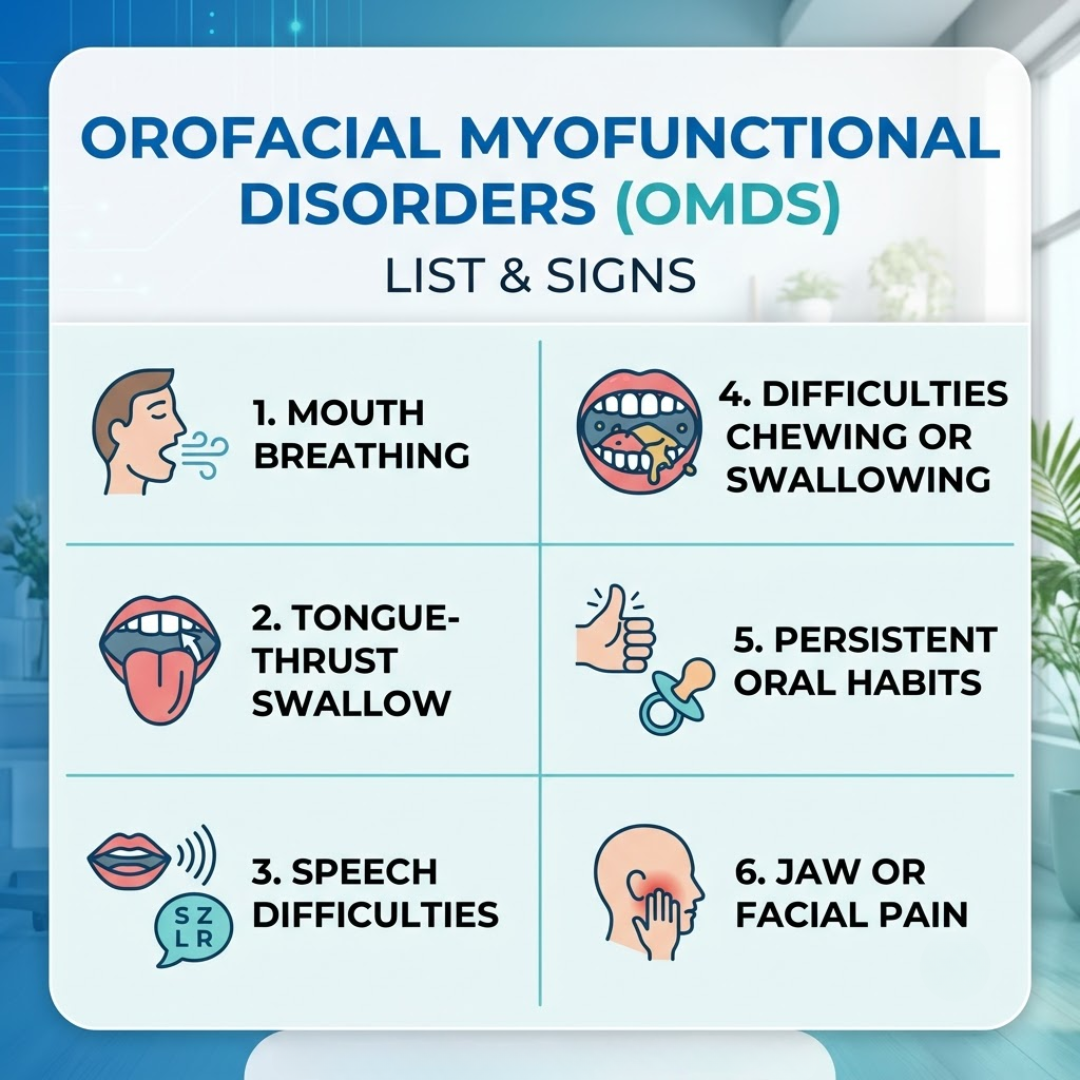
An Orofacial Myofunctional Disorder (OMD) refers to a condition in which the muscles of the face and mouth do not function properly. These muscles play a crucial role in activities like breathing, swallowing, speaking, chewing, and facial expressions. When there is dysfunction in these muscles, it can lead to a variety of issues, such as speech disorders, oral health problems, and difficulties with eating or breathing.
OMDs are typically caused by muscle imbalances or poor oral habits and may require intervention to improve muscle coordination and function.
Causes of Orofacial Myofunctional Disorders
Orofacial Myofunctional Disorders can develop due to a variety of factors, including:
- Developmental Factors: In children, OMDs may occur during the developmental phase, especially if the muscles and oral behaviors are not aligned or coordinated properly as the child grows.
- Prolonged Oral Habits: Behaviors like thumb sucking, extended pacifier use, or mouth breathing can cause or exacerbate OMDs. These habits can alter tongue posture, breathing patterns, and swallowing habits, leading to muscular dysfunction.
- Neurological Conditions: Certain neurological disorders, such as cerebral palsy or other conditions affecting the nervous system, may impact the muscle coordination needed for proper oral function.
- Structural Issues: Problems with the jaw, teeth, or palate, such as cleft palate or misaligned teeth, can affect oral muscle function, potentially leading to OMD.
- Trauma or Injury: Injuries to the mouth or face, including those from accidents or surgery, can result in muscle dysfunction, contributing to OMD.
 Kimberly Benkert is a graduate of Loyola University, College of Dentistry with a BS degree in Dental Hygiene, a Masters of Public Health in Health Policy and Administration from the University of Illinois-School of Public Health, and Certified in Orofacial Myology through the International Association of Orofacial Myology. She is a former faculty member at the University of Illinois-College of Dentistry, Kennedy King Dental Hygiene Program, a past President of the American Dental Hygienists’ Association, the Illinois Dental Hygienists’ Association, and the West Suburban Dental Hygienists’ Society. Kimberly holds a Fellowship in Orofacial Myology and Temporomandibular Muscular Dysfunction with the American Academy of Dental Hygiene. She is a recipient of many awards including the ADHA/J&J Award for Excellence, the ADHA/Discus Dental Distinguished Service Award, the IAOM Connie Painter Award for Outstanding Achievement, and the IDHA Award of Merit. She has been teaching training courses and lecturing on orofacial myofunctional disorders, oromotor imbalances, frenum assessment, dysphagia – oral and pharyngeal phases, digit sucking, bruxism, parafunctional habits, muscular TMD, and ergonomics since 1982 on a national and international basis. She maintains clinical therapy offices located in the Chicago metro-suburban area.